Life with three Shetland Sheepdogs has taught me which training skills actually matter when it counts.
The Chronicles Newsletter publishes the First and Third Thursday of every month.

There are few things more beautiful than a dog running toward you at full speed when you call.
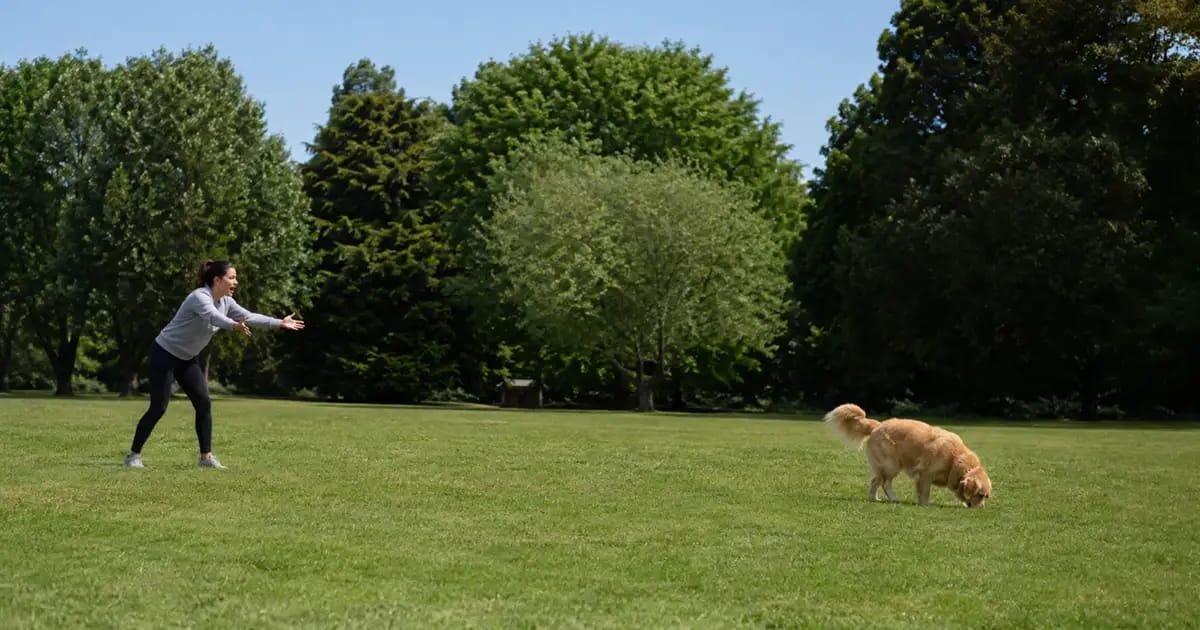
There are also few things more humbling than standing in the middle of a dog park yelling, “COME! COME! COME!” while your dog is pretending she has never met you, does not understand English, and has recently joined a new family made entirely of squirrels.
Reliable recall — teaching your dog to come when called — is one of the most important skills you can build. It is not just convenient. It is a safety skill. A strong recall can stop your dog from running into the road, bothering another dog, chasing wildlife, or disappearing into the bushes while you stand there questioning every life choice that led to this moment.
But here is the part many people miss: recall is not something you “install” once and then expect to work forever. Recall is a relationship, a habit, and a long-term investment. And if you want your dog to come when called, especially somewhere exciting like the dog park, you have to become the best thing available.

Yes, even better than sniffing. Yes, even better than another dog. Yes, even better than whatever mystery item your dog found under a picnic table and is now treating like buried treasure.
That means when you are training recall, your dog needs to believe that coming to you is always worth it. Not sometimes. Not only when you have a biscuit. Not only when you are desperate and your voice has reached the pitch of a smoke alarm. Always.
The biggest mistake people make is using “come” to end the fun. They call the dog, clip on the leash, and leave. Or they call the dog inside from the yard. Or they call the dog away from play, then immediately make the dog do something boring. From the dog’s point of view, “come” starts to mean, “Party’s over.” That is not a recall cue. That is a warning siren. Instead, you want your dog to think, “When I hear that word, something amazing happens.”
Start at home, where there are fewer distractions. Say your dog’s name happily, then your recall word — “Come!” — and when she gets to you, reward like she just solved climate change. Use great treats. Not the dry crumb from the bottom of your pocket. Use something your dog truly loves. Chicken, cheese, liver treats, whatever makes your dog’s eyes light up like Biscuit just found an unattended credit card.
Keep it easy at first. Call from a few feet away. Reward generously. Then release your dog back to whatever she was doing. That release is important. It teaches her that coming to you does not always mean the fun ends.
Then build distance. Call from the hallway. Call from another room. Call from the yard. Call when she is mildly distracted. Every time she comes, reward. Praise. Celebrate. Be fun. Be silly. Be worth leaving the other thing for.
When you move outdoors, use a long line. A long line gives your dog freedom while still keeping things safe. It also prevents your dog from learning that “come” is optional. If you call and your dog ignores you, do not stand there repeating the cue like a broken doorbell. You do not want “come, come, come, come” to become background noise.
Say it once. Make it cheerful. Then help your dog succeed. Back up, clap, crouch down, make kissy noises, run away a few steps, become interesting. The moment your dog turns toward you, praise. When she arrives, reward big. And then — this matters — let her go back to exploring.
That is how you build a dog who checks in willingly. You are not just competing with the environment. You are becoming part of the fun.
For the dog park, do not wait until you need to leave before practicing recall. That is like only calling your child’s name when it is time for a dentist appointment. Instead, practice throughout the visit.
Call your dog when she is nearby. Reward. Send her back to play. Call her after a short sniff. Reward. Send her back. Call her when she glances at you. Reward. Send her back.
You are teaching a very powerful lesson: “Coming to me does not ruin your fun. It makes the fun better.”

At first, do not call your dog away from the most exciting thing in the universe. If she is sprinting with her best friend or investigating an extremely suspicious patch of grass, your recall may not be ready for that test. Start with easier moments. Build success. Gradually work up to harder distractions.
And please, never punish your dog after she comes to you. Even if she took ten minutes. Even if she rolled in something that may legally qualify as a biohazard. If she finally comes and you scold her, you have just taught her that coming back is a bad idea.
Reward the return. Every time.
You can be annoyed internally. That is what teeth-gritting is for.
A reliable recall is built through hundreds of happy repetitions. It is built with good rewards, smart timing, and a promise that coming to you is safe, fun, and worthwhile.
Your goal is not to sound more serious. Your goal is to be more valuable.
So train it in the kitchen. Train it in the yard. Train it on walks. Train it at the park. Pay well. Celebrate often. Release your dog back to fun whenever possible.
Because one day, when it really matters, you do not want your dog thinking, “Hmm, let me consider my options.”
You want her thinking, “That’s my person — and getting to them is the best thing I can do.”

Today’s Question: “Why Do Dogs Tilt Their Heads When We Talk to Them?”
Cricket’s Answer:
Excellent question. And no, contrary to Biscuit’s theory, dogs do not tilt their heads because “the thoughts are sliding to one side.” That is not how brains work. Usually.
When dogs tilt their heads, scientists believe a few things might be happening. One possibility is that we are trying to hear better. Dogs have excellent hearing, but our ears are shaped differently than human ears, and some breeds have more ear fluff, ear flaps, or dramatic personal hairstyles than others. By tilting our heads, we may be adjusting the position of our ears to figure out where a sound is coming from or to better understand the tone of your voice.
Another possibility is that we are trying to see your face more clearly. Dogs pay close attention to human expressions, especially when those expressions lead to important outcomes like supper, walks, treats, or the forbidden cheese drawer. Depending on the shape of a dog’s muzzle, tilting the head may help us get a better view of your mouth and eyes. In other words, we may be gathering visual data. Very scientific. Very adorable.

There is also evidence that some dogs tilt their heads when they are concentrating. A small study found that dogs who had learned the names of toys were more likely to tilt their heads when hearing the toy’s name. This suggests that head tilting may happen when a dog is processing something familiar and meaningful. For example: “ball,” “walk,” “cookie,” or “Who shredded the napkin?”
Of course, humans often respond to head tilts with smiles, attention, and squeaky noises like, “Awwww!” This means some dogs may learn that head tilting is a highly effective human-control strategy. I am not saying dogs do this on purpose. I am simply saying the data is suspicious.
So the answer is: dogs may tilt their heads to hear better, see better, think harder, or train humans to become more generous with snacks.
In conclusion, the head tilt is not just cute. It is a complex blend of sound analysis, facial observation, memory processing, and possibly mild emotional manipulation.
Biscuit says hers is “just natural genius leaking sideways.”
I have filed a formal objection. 🐾
The Boneheads Band is back! And it’s an epic performance. See our latest on YouTube!
Before you go: Mental stimulation is a win-win-win. You and your dog have fun together, your dog is exhausted, and your bond is that much stronger. Greg Burke
A Note from our Sponsor:
10K Steps Is a Myth–Try This Instead

When motivation is lacking, jumping into heavy routines is the fastest way to burn out. That’s why millions of people are turning to walking as the foundation of their fitness journey.
Walking lets you enjoy the outdoors, clear your head, and practice mindfulness. It’s simple, sustainable, and can support lasting weight loss if you know how much you need. The “10,000 steps a day” rule is outdated; everyone’s lifestyle is different.
With Simple, you’ll get access to habit-based coaching that’s helped users lose over 18 million pounds. Take the quiz to discover your personalized walking target.
Cartoon of the Week!

Want more tips, tricks, and tail-wagging tales? Visit our blog anytime at cricketchronicles.ca!
Until next time,
The Dad, the Mom and all the Pups!
The Chronicles publishes at the beginning of every month and in the middle.
Add your email to get every edition!